Meet Us Anywhere!
  • Home
  • Blog
  • Photos
  • Recipes
  • Where?
  • Who?
  • About

Paella de Valencia

5/15/2020

0 Comments

 
Picture
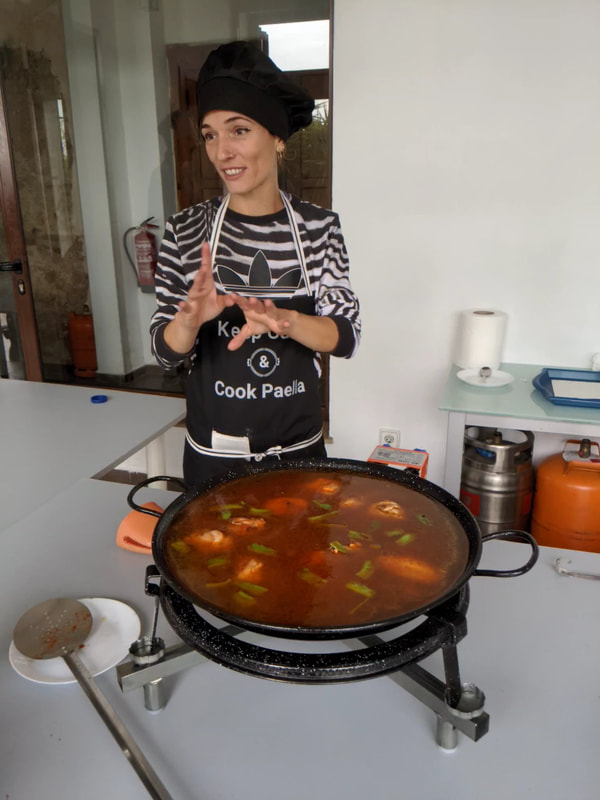
One of the best experiences of our European adventure was enjoying an authentic Paella cooking class at "Mi Paella en el Huerto" ("My Paella in the Garden"). Our friends Hop, Douglas, and Dan raved about the class and insisted we add it to our plans. Our paella experience began when Maria, our guide / instructor, picked us up in the City Hall Square, and began passionately weaving the story of paella from the viewpoint of a native who lives in the very region of its origin.

We came away from the day with recipes and techniques that we've use frequently since. It's particularly great because everything can be done in one pan!
Picture
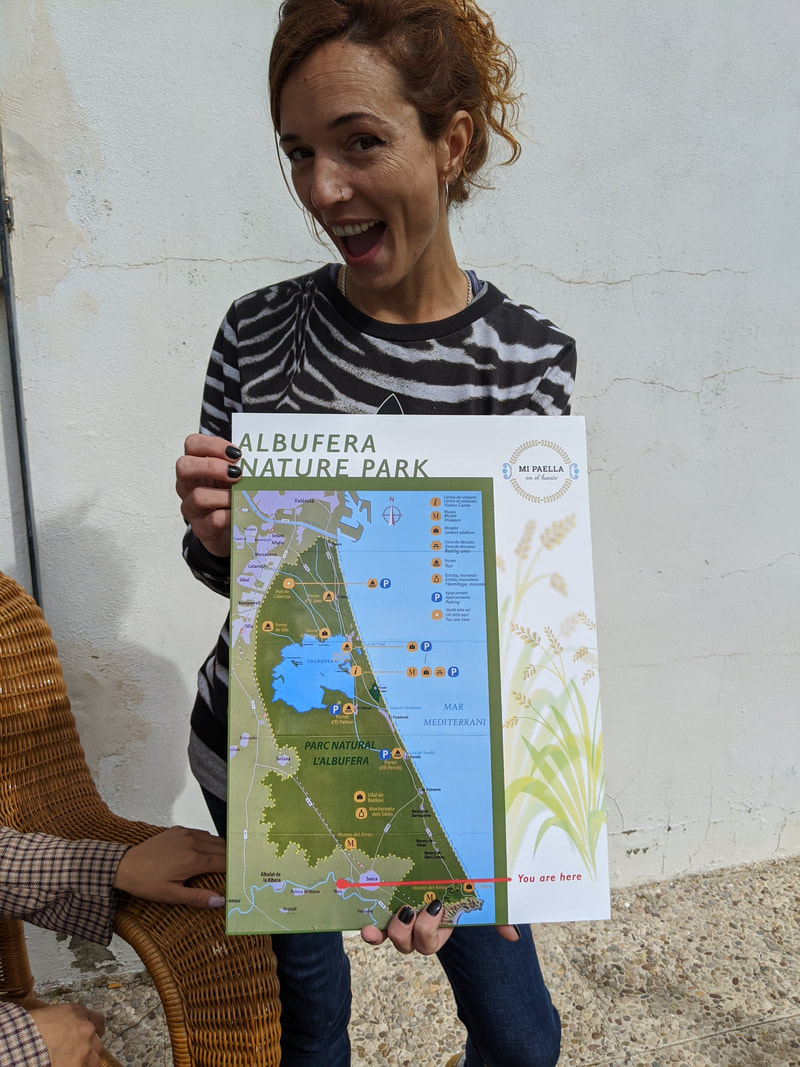
Paella is an obsession in Valencia. Authentic paella originated in the rice paddies surrounding the Albufera lake just south of the city. And while we often think of it as a seafood dish, Valencians scoff at that version, calling it just "Seafood Rice". The "real thing" is made strictly with chicken, rabbit, and local vegetables, with  garden snails as an option.

​We offer here the recipe we learned in the class, adapted to a normal skillet for those without the signature pan from which the dish gets its name. (Derived from the latin word "patella" for pan or plate.)
Picture
Here is a bit of the history, tradition, and "etiquette" of paella that Maria shared with us:
  • Paella originated as a lunch-time meal for the rice farmers. It was prepared over an open fire and the ingredients generally came from the surrounding woods and fields. Hence, Valencians will seldom have it for an evening meal - it's most often prepared on Sunday afternoon.
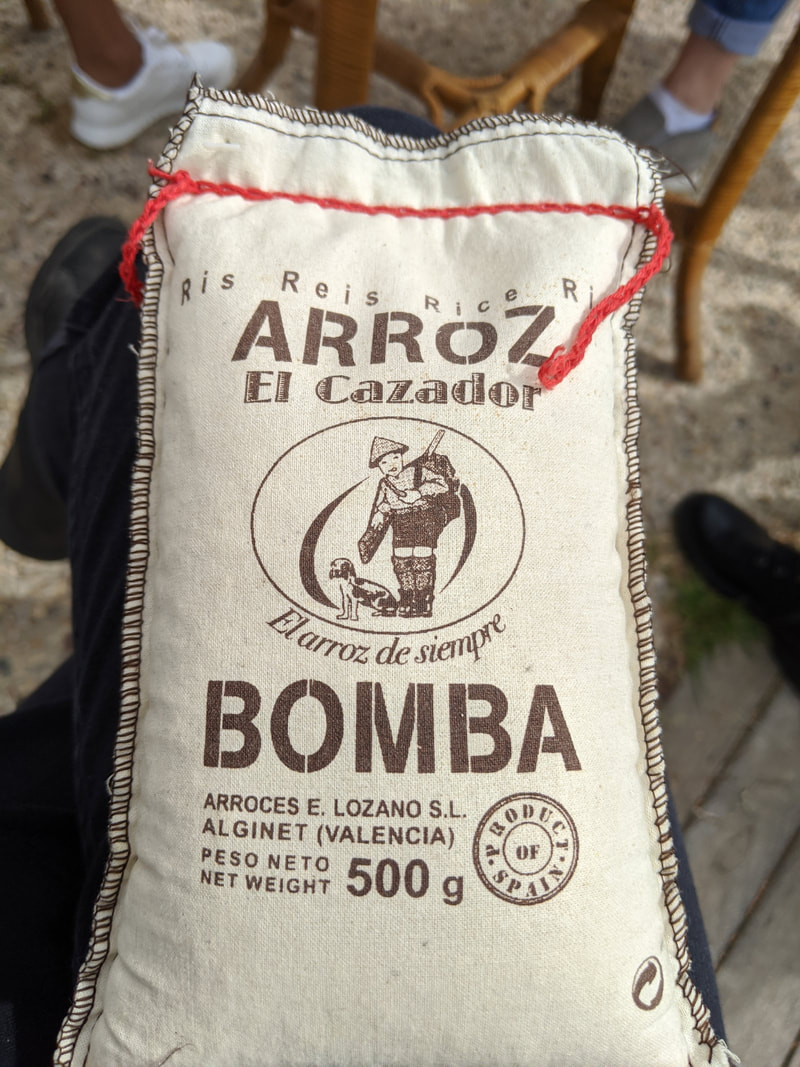
  • The rice is critical. It must be a short-grain variety from the Albufera Nature Park that is special for its high liquid absorption (3 times its volume). "Bomba" rice from this area is available in US gourmet shops and online.
  • The rice paddies were developed by the Moors starting in the Middle Ages. (The many place names starting with "Al" is a clear give-away of the Arab influence in the area.) The ancient irrigation systems are still used in some places because they work perfectly.
  • Garden snails that live on a steady diet of rosemary are sometimes added - mainly to impart the dish with that distinctive herbal flavor. Adding a few sprigs of rosemary does the trick.
  • The paella should be eaten with a spoon - preferably wooden - and directly out of the pan.
  • The paella is placed on the table, studded randomly with pieces of meat and vegetables, and once placed on the table it's very bad manners to turn it. This leads to a strategic jockeying for the seat in front of the quadrant has the ingredients you like best. If you find yourself boxed out of the best seat, bartering is encouraged.
  • The prized part of the paella is the darkened crust that forms at the bottom - called "socarrat". You turn your spoon over to scrape up every last bit, starting from the outside edge and working towards the middle where the soccarat is perfect.

The ingredients listed below are "per-serving" amounts and the recipe can easily be adjusted for the number of people. But it's important that the size of the pan also be adjusted so that the rice is ideally no deeper than the "width of a finger". A good sized skillet (12 inches or more in diameter) will be the right size for no more than 2 to 3 portions. Use more than one pan if you are serving more. It's best if the skillet has a flat bottom rather than one that bulges up in the center. Non-stick is OK, but cast iron or steel is better. A 15" or more paella pan even better still, if you have it!
​

Ingredients (per serving)

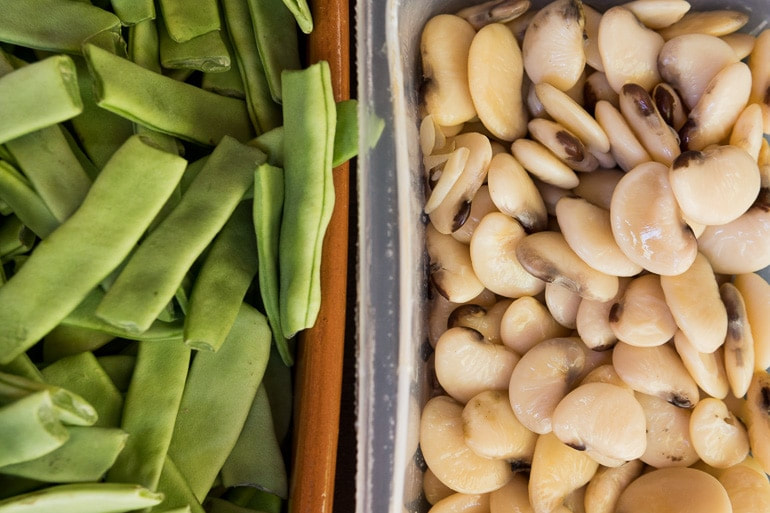
PictureFerradura and Garrafón Beans
Remember - the quantities here are per-serving. Best results in a typical large skillet is for 2-3 servings.
  • 1/2 TBS Olive oil 
  • 2-3 small pieces of chicken, on the bone. Cut up thighs and wings are best. Each piece should be 2 to 2.5 oz.
  • 2-3 small pieces of rabbit, on the bone. (No rabbit? No problem. We usually use country style pork ribs cut into bite-sized (2 to 2.5 oz) pieces. Valencians would call this "Mountain Paella".)
  • 3/4 cup of green beans cut into 2 to 3-inch lengths. [The Valencians use a local wide bean called "Ferradura" or "Batxoqueta". A bit difficult to find in the US.]
  • 1/2 cup of canned butter beans (drained and rinsed). [The Valencians use a local variety of white bean called "Garrofón". These can be found online - they are dried and will need to be soaked overnight per package directions.) 
  • 1 small/medium tomato, cut in half and grated using the largest holes of a box grater. The skin will stay behind and can be tossed. [Alternatively you can peel (by boiling for 30 seconds) and dice it finely.]
  • 1/2 tsp sweet paprika
  • 1 pinch of saffron
  • 1/2 cup "Bomba" Rice. [In a pinch use a short/medium grain rice - like a risotto rice - NEVER LONG GRAIN.]
  • 2 cups water (4 parts water for each part rice - 1 part will simmer off while making the broth and 3 parts is absorbed by the rice)
  • Salt 
  • 1 sprig of fresh rosemary

Process

  • LEVEL THE SKILLET: Set the skillet on the stove and add oil to the COLD pan. Before you turn on the burner, use the oil flow to help you level the burner as much as you can. Wadded up aluminum foil placed strategically under the corners of the burner grate can help you get as level a pan as possible.
  • Turn the burner on medium high. Once the oil heats up add the meat. Let it sit undisturbed so it develops a good brown crust on the bottom. Then turn and do the same on all sides. Well-seared meat makes the best result.
  • Push the meat to the sides of the pan and add the green beans into the center. Stir occasionally and sear them until the have flecks of golden color all around. 
  • Push the beans to the sides of the pan and add the grated tomato. Cook and stir until the tomato has lost much of its water and thickens up.
  • Have your water ready next to the stove. Push the tomato aside and add the paprika to the center of the pan. Stir while frying for just a few seconds until it is fully moistened and the flavor "blooms". Then pour in the water.
  • Use a spatula or wooden spoon to scrape up all of the "fond" that formed on the bottom of the pan from all of browning.
  • Add the saffron (crumble it in your fingers a bit) and salt to taste
  • Arrange the ingredients evenly in the pan and bring the pan to a healthy simmer. Let simmer for 25 minutes into a rich and flavorful broth.
  • Taste the broth and add salt as desired. [It can be a bit on the salty side since that will reduce once the rice is added.]
  • Add the butter beans and then the rice. With a spatula spread the rice and all the other ingredients around so they are very well distributed. Place the sprigs of rosemary on the top and bring to a boil.
  • Simmer on medium high for 10 minutes. DO NOT STIR.
  • Check that you have a good even distribution of rice and ingredients. Make small adjustments if you have some bare patches without disturbing too much.
  • Lower the burner to medium and simmer for another 5-7 minutes until the water is fully absorbed.
  • To make the "socarrat" (the crispy fried rice on the bottom), turn up the heat to medium high and move the pan on the burner, 30 seconds or so of sizzling in each quadrant, so that you get an even browning on the edges and not just in the middle. Continue until you can carefully peek under the rice with the tip of a spoon to see that there is some crisping. Don't over-do it!
  • Turn off the heat and let it sit for at least 5 minutes before serving. This allows the flavors to meld and the rice to reach an even better consistency.
  • Serve right in the pan and eat with a spoon!!

Demo

0 Comments


Leave a Reply.

    Recipes from the Road

    Click on recipe title or  “Read More” to see the full recipe and demo video

    Categories

    All
    Appetizers
    Asian
    French
    German
    Greek
    Italian
    Mexican
    One Pan Meal
    Quick & Easy
    Regional Specialties
    Seafood
    Spanish
    Vegetarian

    Archives

    December 2025
    November 2025
    September 2021
    July 2021
    March 2021
    February 2021
    January 2021
    December 2020
    November 2020
    June 2020
    May 2020
    April 2020

    RSS Feed

Menu

Home
Blog
Photos
Recipes
​Where?
Who?
About

Social Media

Unsubscribe
© COPYRIGHT 2019. ALL RIGHTS RESERVED.
  • Home
  • Blog
  • Photos
  • Recipes
  • Where?
  • Who?
  • About